Technical service as a controlled sequence

Kärcher service planning connects the route, machine, operator, and maintenance record

A useful service program starts before commissioning. It records the intended floor, soil, shift, utilities, storage, charging or fuel arrangement, and acceptance method so that later observations can be compared with the original duty.

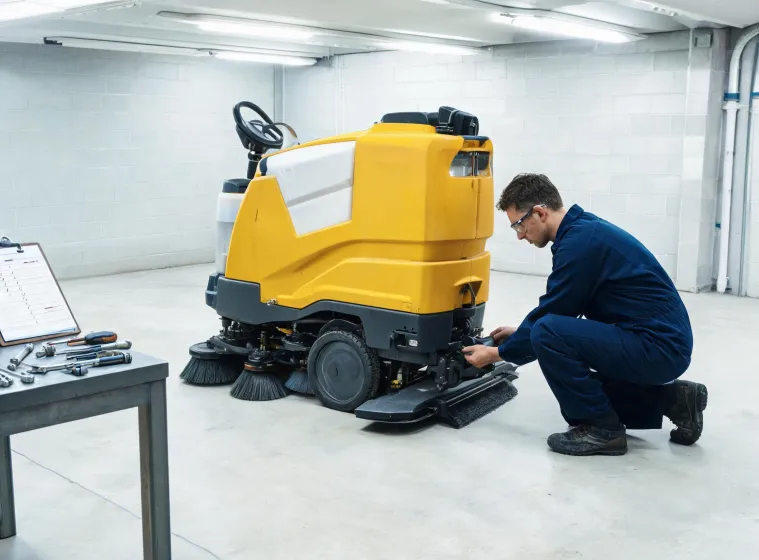
Technician inspecting a Kärcher floor scrubber
Four service pillars

Keep every intervention tied to an observable condition

The horizontal record below follows the machine from application brief to routine review. Each stage produces evidence that the next technician or facility manager can interpret.

01 · Define

Application survey

Measure doorways, turns, slopes, refill distance, waste-water handling, available power, storage clearance, and the time in which the floor must reopen. Photograph coatings, joints, drains, and representative soil. This prevents an impressive open-floor demonstration from hiding difficult route sections.

02 · Prove

Controlled demonstration

Use a representative area and record brush or pad, chemistry concentration, solution flow, travel speed, operator, and floor condition. Inspect pickup behind the squeegee and revisit the same 1 m² area after 1, 3, and 5 minutes. Pressure-washing tests also need runoff containment and surface-tolerance checks.

03 · Transfer

Operator handover

Handover covers pre-use inspection, correct consumables, fill and dump sequence, safe traffic interaction, filter or squeegee care, charging or power isolation, and end-of-shift cleaning. A signed checklist is more useful than an unstructured demonstration because it identifies exactly what was reviewed.

04 · Review

Maintenance evidence

Record operating hours, observed symptoms, fault codes where available, wear items, replaced parts, and test results after work. Machine downtime can originate in route conditions, setup, consumables, or hardware; the service record should distinguish these before a component is condemned.

Handover checkpoints

A four-point record that remains readable after the demo

01Route mapAccess, turns, utilities, refill, dump, and storage
02Test sheetSurface, soil, setup, operator, time, and observation
03Handover logInspection, operation, cleaning, and isolation
04Service historyHours, symptoms, actions, parts, and verification

Service boundary

Published intervals and procedures vary by model, operating condition, and region. The current operating instructions, safety information, parts documentation, and local service guidance remain controlling. Combustible dust, hazardous material, explosive atmospheres, hot media, aggressive chemistry, and public-traffic work require a separate risk assessment; a general inquiry is not a substitute for that review.

Kärcher service review at a working facility

Prepare the evidence before the service conversation

Send the model reference if known, operating hours, observed symptom, date of occurrence, floor and soil condition, consumables in use, and clear photographs. For a new installation, send the route measurements and acceptance criteria instead.